
Token, chains, RPC
where your token lives.
Tell the wallet which token is its home, which networks are on, and how it reaches them. Keyed RPC endpoints stay on the server.
01Project token
Console, Project token: the chain, the ERC-20 contract address, symbol, name, decimals, logo (https) and links (Docs, Website and so on). If the contract is not a valid address, or its chain is switched off, the token is dropped with a reason on the Status page, and the app shows an empty home that says no token is set. It never shows a placeholder token.
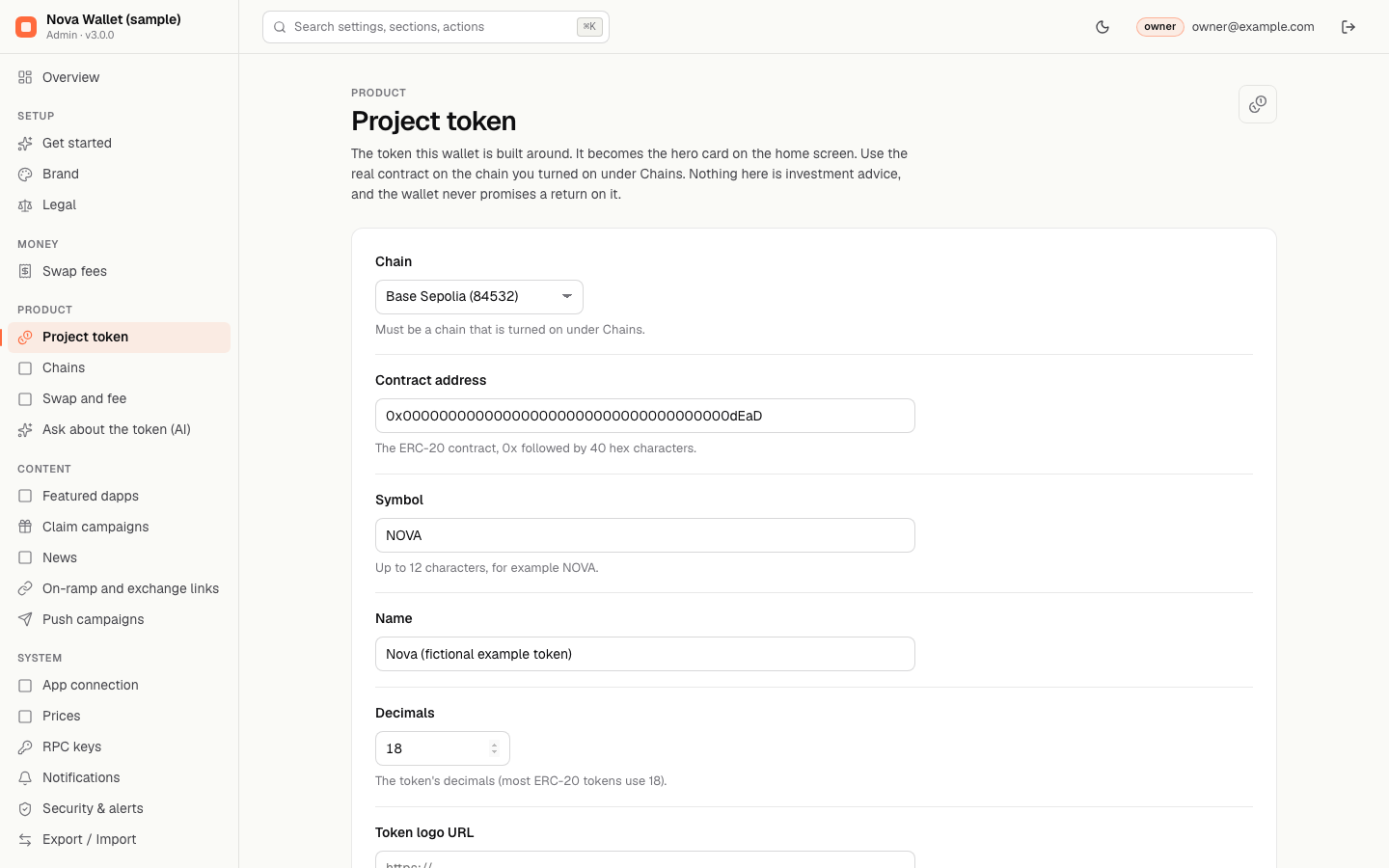
Prices. The price and 24 h change come from CoinGecko by contract. Tick "CoinGecko lists this token" only if it does. Otherwise the app shows no price, never a number from anywhere else. On test networks there is no price. See the CoinGecko plan and key under Prices.
02Chains
| Network | Chain id | Swap |
|---|---|---|
| Ethereum | 1 | yes |
| Base (on by default) | 8453 | yes |
| BNB Chain | 56 | yes |
| Polygon | 137 | yes |
| Arbitrum One | 42161 | yes |
| Ethereum Sepolia, Base Sepolia, BNB Chain Testnet, Polygon Amoy, Arbitrum Sepolia | 11155111, 84532, 97, 80002, 421614 | no (0x serves main networks only) |
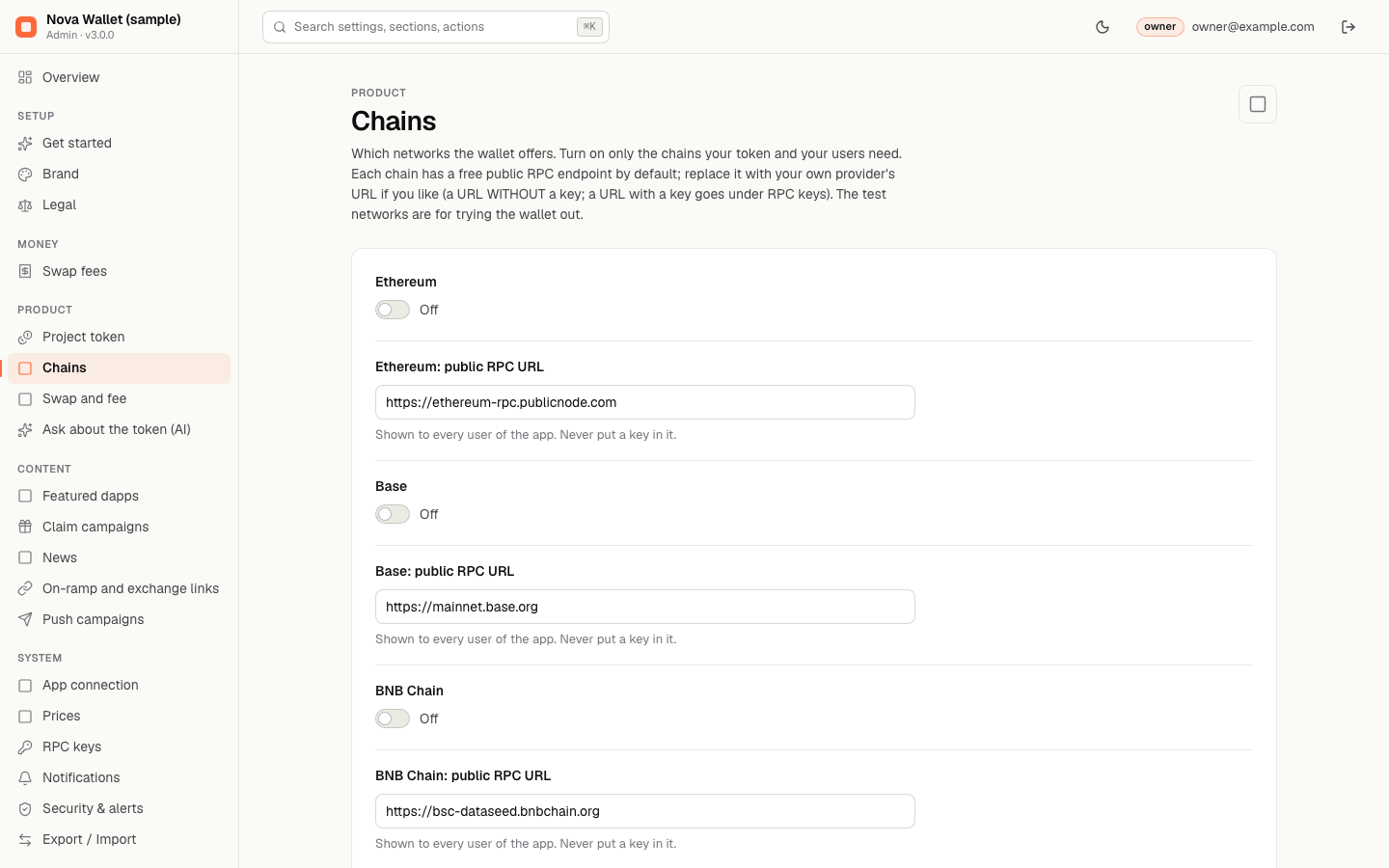
Only enabled networks appear in the app. A network that is not listed is not supported by the wallet, and the dapp browser refuses wallet_addEthereumChain for the same reason. Each network has a default public RPC URL. Public endpoints are shared and rate-limited, so use a keyed endpoint for production.
03Keyed RPC endpoints
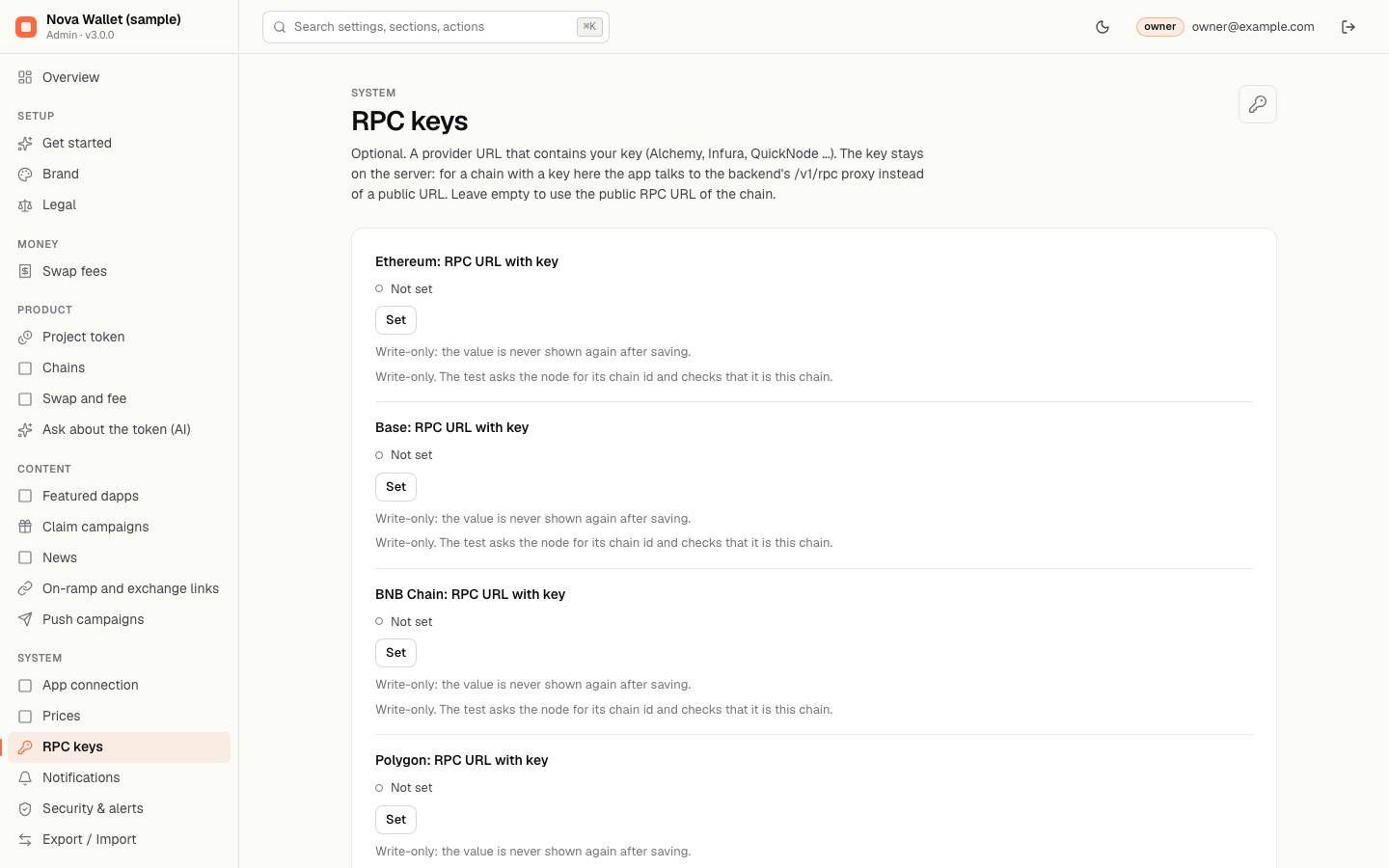
An RPC URL with a key inside must never be handed to every phone. Put such a URL under RPC keys (write-only, owner only). The app then reaches that network through the backend's /v1/rpc/<chainId> proxy and never sees the key. If you paste a URL that looks like it holds a key into the public field, the console refuses it, uses the chain's default public URL, and says so on the Status page.
- Press Test next to a keyed URL: the console calls
eth_chainIdand the answer must match the chain. - The proxy allows only read methods and broadcasting a signed transaction (
eth_sendRawTransaction), up to 20 calls per batch, with a per-IP budget (default 240 per minute) that you can change. - The Status page checks that every enabled chain's RPC answers.
04Try it on a test network first
Enable Base Sepolia, set your token there, and use the wallet to send, receive, claim and ask the assistant. Swaps need a main network. When everything works, switch the test network off and your main network on.